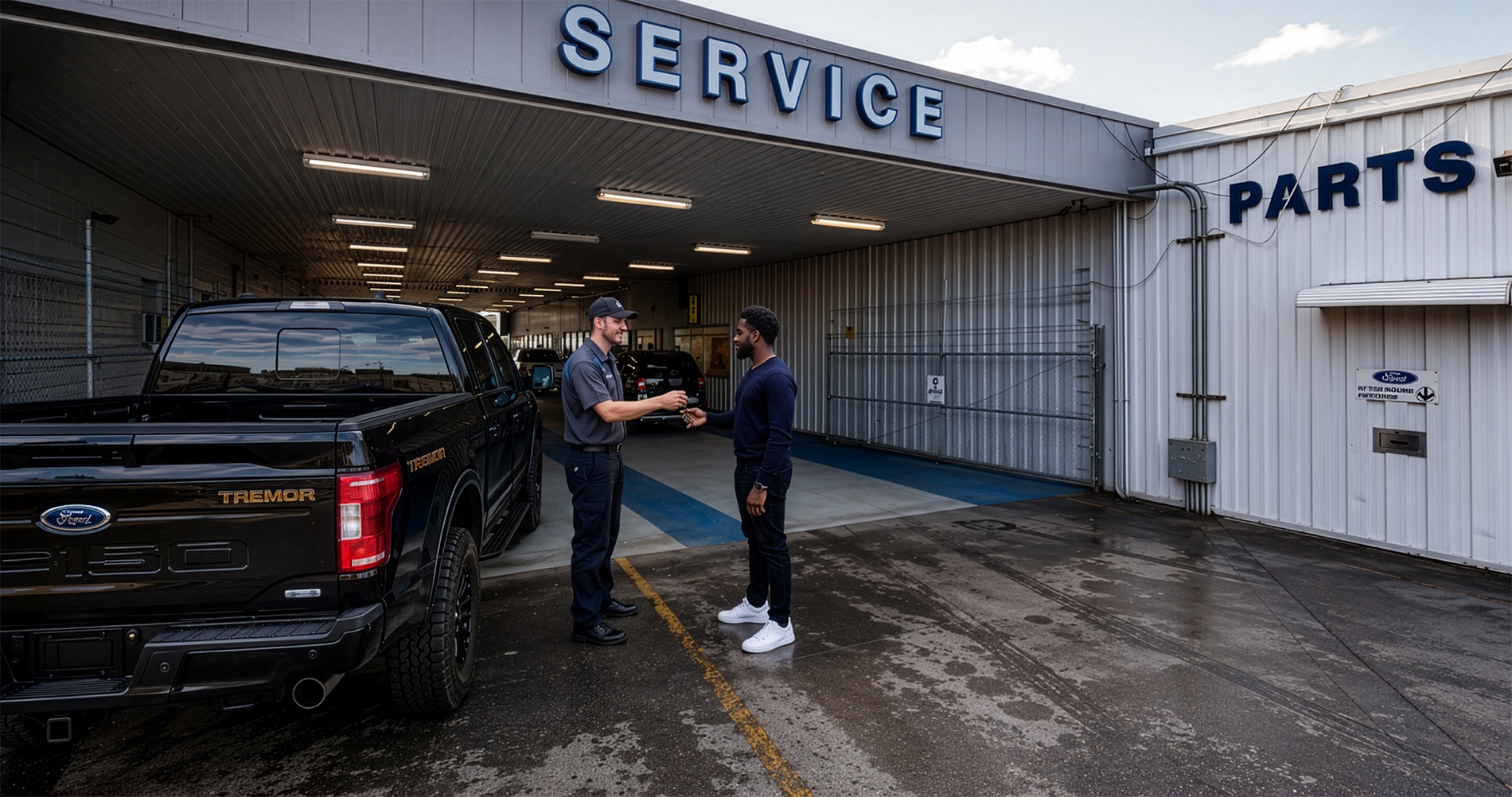
How the schedule works
Track three different maintenance clocks
The easiest way to read the F-150 schedule is to separate what the truck calculates, what Ford assigns to a fixed interval, and what changes because of equipment or operating conditions.
Oil-life monitor
Ford's Intelligent Oil-Life Monitor determines when routine oil service is due based on use. For the 2026 F-150, do not let the service interval exceed one year or 10,000 miles.
Fixed milestones
Brake fluid, cabin and engine air filters, spark plugs, belts, driveline fluids, and coolant are tracked separately. An oil change does not automatically make all of them due.
Use and condition
Towing, heavy loading, extended idling, short trips, dust, off-road use, water exposure, and certain equipment can add inspections or change when specific items need attention.
Current-model reference
2026 Ford F-150 maintenance milestones
Use this as a planning reference for a 2026 F-150, not as a universal schedule for every model year. Engine, drivetrain, equipment, and operating conditions can change which instructions apply.
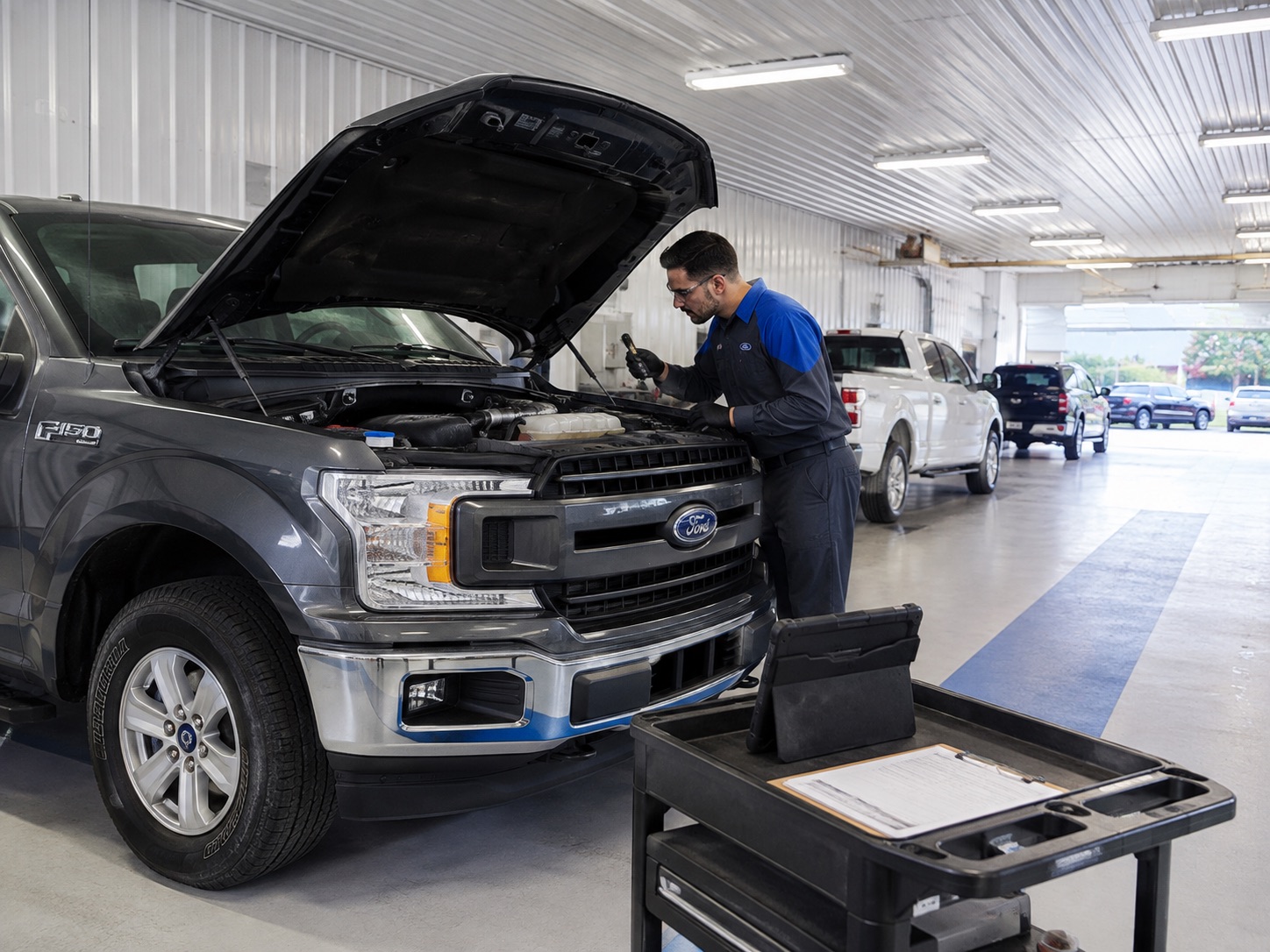
More than an oil change
What Ford pairs with an oil-life service visit
When the oil-life monitor calls for service, the 2026 schedule also brings a group of inspections into the same visit. That makes the appointment a useful checkpoint for wear and condition—not just an oil-and-filter transaction.
Rotate tires and inspect wear.
Inspect brakes and the cooling system.
Inspect steering, suspension, driveshaft-related components, wheels, and applicable driveline items.
Inspect cabin and engine air filters plus exhaust and heat-shield components.
If the truck is 4WD or has equipment that changes the inspection list, those items should be matched to the exact configuration rather than assumed from a generic F-150 checklist.
When use changes the plan
Truck work can matter more than the odometer
Ford's additional guidance is tied to what the truck actually does. These are the use patterns worth identifying before you decide that a shorter or additional service interval applies.
Towing or heavy loading
Regular trailer use or heavy payloads can trigger additional severe-duty guidance. Check the instructions for your exact engine, drivetrain, and use instead of assigning every towing truck the same shorter interval.
Idling, traffic, or repeated short trips
Engine operating time can accumulate without much mileage. Ford includes excessive idling and short-trip operation among conditions that can affect maintenance planning, and the oil-life system responds to vehicle use.
Dust, unpaved roads, or off-road use
Dust can shorten air-filter life. Off-road operation can add inspections and, on the 2026 Raptor, creates a specific 30,000-mile front-axle and transfer-case fluid requirement.
Water exposure or driveline concerns
Water submersion, leakage, or prolonged severe operation can make axle or transfer-case fluid condition more important before the normal long-term mileage milestone.
Savannah-area context: Boat towing, I-95 commuting, long idle periods, and work on dusty or unpaved surfaces can make some of these conditions relevant to F-150 owners around Savannah and Richmond Hill. Coastal Georgia itself does not automatically put a truck on a severe-use schedule—the truck's actual routine does.
J.C. Lewis Ford Savannah
Match the service location to the work your F-150 needs
Our service department at 9505 Abercorn Street handles the full range of dealership service, including work that needs lifts, specialized equipment, or deeper diagnostics. For qualifying routine maintenance, Ford Mobile Service can bring a factory-trained Ford technician to an eligible home or workplace location in the Savannah area.
Use the shop for full-service needs
Scheduled maintenance, diagnostics, driveline work, repairs, and service requiring shop equipment can be handled at the Savannah service department.
Use mobile service for eligible routine work
Oil and filter changes, tire rotations, battery work, filter replacement, diagnostic scanning, software updates, and other qualifying services may be available on-site. Vehicle, service, distance, and appointment restrictions apply.
Before you schedule
Bring the details that can change the answer
If you want help confirming what is due, have the model year, VIN, engine, 2WD or 4WD configuration, current mileage, oil-life status, and recent service history available. Tell us if the truck regularly tows, idles, works off-road, runs in dust, or has equipment tied to a model-specific exception.
You can review the broader J.C. Lewis Ford service department, check current FordPass Rewards information, or contact our team if you need help choosing between in-shop and mobile service.

Service planning
Need help matching your F-150 to the right maintenance step?
Schedule service when the oil-life monitor calls for it, when you reach a separate maintenance milestone, or when your truck's use makes you unsure which Ford guidance applies.
F-150 maintenance questions
Questions owners ask about the 2026 F-150 schedule
Use the schedule for your exact truck
This guide summarizes current U.S. maintenance information for the 2026 Ford F-150. Requirements can vary by model year, engine, drivetrain, equipment, operating conditions, service history, and vehicle condition. Follow the Owner's Manual and vehicle messages for your exact F-150, and do not delay diagnosis of a warning light, leak, braking change, temperature alert, vibration, or drivability concern just because a routine maintenance interval has not arrived.