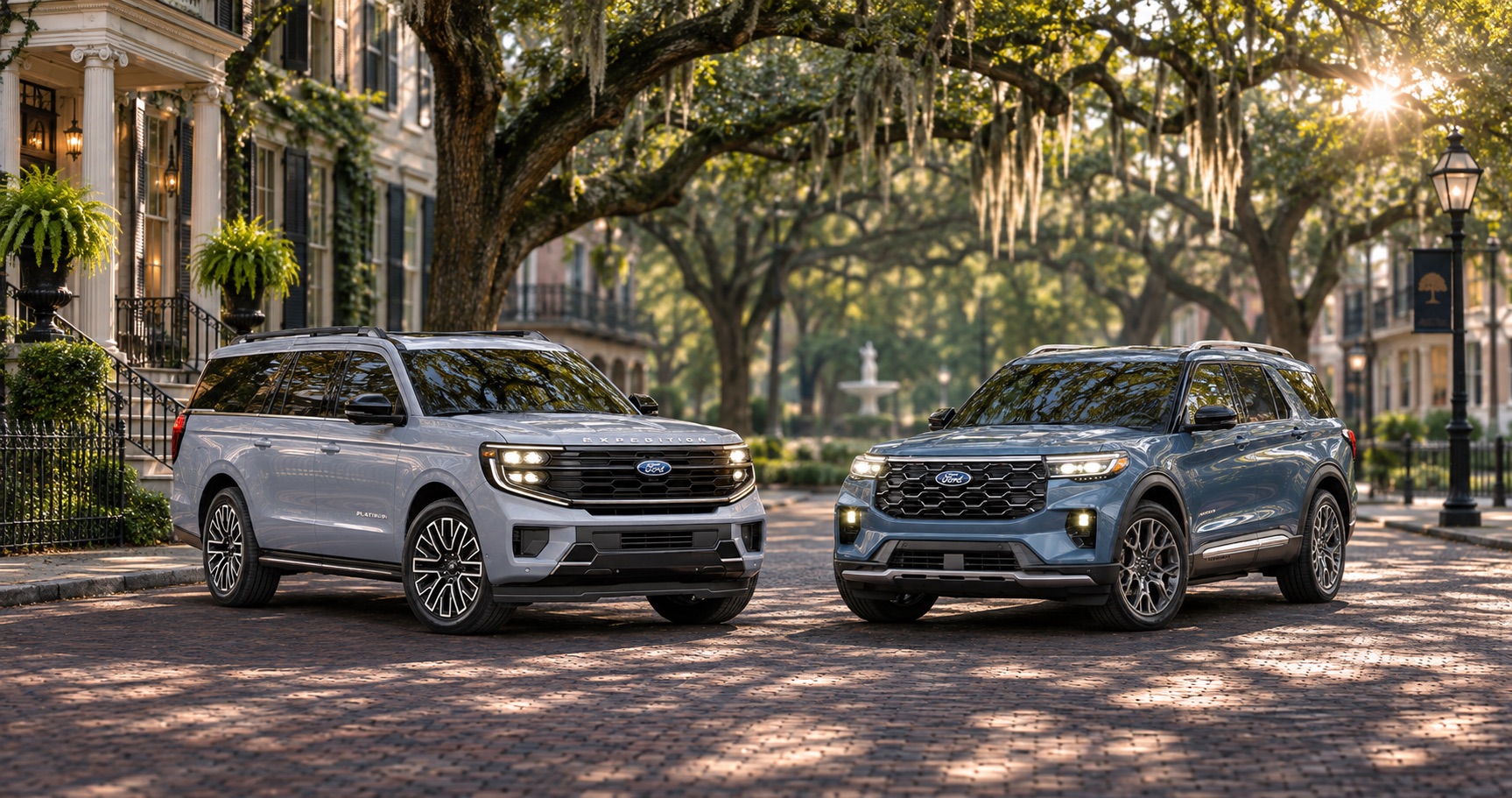
A J.C. Lewis Ford Three-Row SUV Comparison
2027 Ford Explorer vs. Expedition
Both have three rows. The better match depends on how your family fills those seats, what travels behind them, and how much SUV you want to drive every day.
Shopping for a three-row Ford SUV starts with an easy question: what do you actually need that third row to do? The 2027 Explorer and Expedition both welcome families, friends, and extra gear, yet they approach that job from different directions. Explorer offers the flexibility of a third row in a midsize vehicle; Expedition is built around fuller-size passenger and hauling needs, with a MAX version for even more luggage space behind the seats. Neither approach is automatically the right one for every household.
Picture an ordinary week in Coastal Georgia. An SUV that feels easy to park near Savannah's historic squares may be ideal for school pickup, errands, and a trip out to Tybee Island. The calculation can change when grandparents join a weekend drive, every child brings a bag, or a boat trailer heads toward the Savannah-area waterways. The important distinction is how often those bigger loads happen, not how impressive the largest number looks on paper.
This guide helps you make that choice in the right order: start with real family situations, then compare seating arrangements, usable cargo space, driving dimensions, price, and towing equipment. The Expedition-versus-MAX choice comes after deciding whether the full-size vehicle itself earns its place in your routine. Check the actual vehicle's seat layout and equipment before choosing a trim or setting up a test drive at J.C. Lewis Ford.
Family-Use Shortcuts
What Does Your SUV Need to Handle Most Often?
Choose the situation closest to your routine. See which Ford SUV makes the strongest starting point and when another configuration deserves a closer look.
Your Starting Point
Everyday School Runs + Easy Parking
Start With Explorer
Why It Fits
Explorer gives you three-row flexibility without the everyday footprint of a full-size SUV. Its shorter, narrower body can make navigating Savannah parking garages, historic-area spaces, and school pickup lines easier, especially when extra passenger seats are only needed occasionally.
Also Consider
Standard Expedition becomes more appealing when six or seven passengers regularly travel with luggage or sports equipment behind the occupied third row. Compare that combined load before paying for additional vehicle size.
Your Starting Point
Eight People Riding Together
Start With Expedition
Why It Fits
Explorer cannot seat eight, making Expedition the clear choice when everyone must travel together. Expedition Active seats eight as standard, while eligible Platinum and Tremor configurations can offer eight with the appropriate second-row bench. King Ranch seats seven only, so confirm the exact vehicle's layout.
Also Consider
Choose between standard Expedition and MAX based on what eight people bring along. MAX adds substantially more luggage room behind the occupied third row, while the standard body is shorter and easier to accommodate in everyday parking spaces.
Your Starting Point
Heavier Boat + Camper Towing
Start With Expedition
Why It Fits
A larger boat or camper can push beyond Explorer's 5,000-pound maximum towing capacity. Properly equipped Expedition 4x4 models offer substantially more capability, with published maximums up to 9,600 pounds for the standard body and 9,000 pounds for MAX. Those ratings depend on the specific drivetrain and towing equipment.
Also Consider
A smaller boat or trailer may remain within an Explorer's actual towing limits, making its easier daily maneuverability worthwhile. Before deciding, verify the loaded trailer weight, tongue weight, passenger and cargo load, and exact vehicle ratings rather than choosing by the trailer's size alone.
Your Starting Point
Adults or Teens in the Third Row
Start With Expedition
Why It Fits
When adults or growing teenagers regularly occupy the third row, passenger room becomes a meaningful advantage. Expedition provides 36.5 inches of published third-row legroom and three passenger positions, compared with Explorer's 31.8 inches and two positions. That additional space can matter on longer family drives.
Also Consider
Explorer can still work well when the third row mainly accommodates children, smaller passengers, or shorter trips. Have your regular passengers try both back rows before deciding whether Expedition's added room justifies its larger size and cost.
Your Starting Point
Sporty Driving + Weekend Exploring
Compare Explorer & Expedition
Why It Fits
For sporty pavement driving, Explorer ST is the natural starting point with its road-focused suspension and performance equipment. Explorer Tremor takes a different approach with off-road hardware in a midsize body. Expedition Tremor offers its own trail-focused capability in a larger SUV, making it worth exploring when passenger room and carrying capacity are equally important.
Also Consider
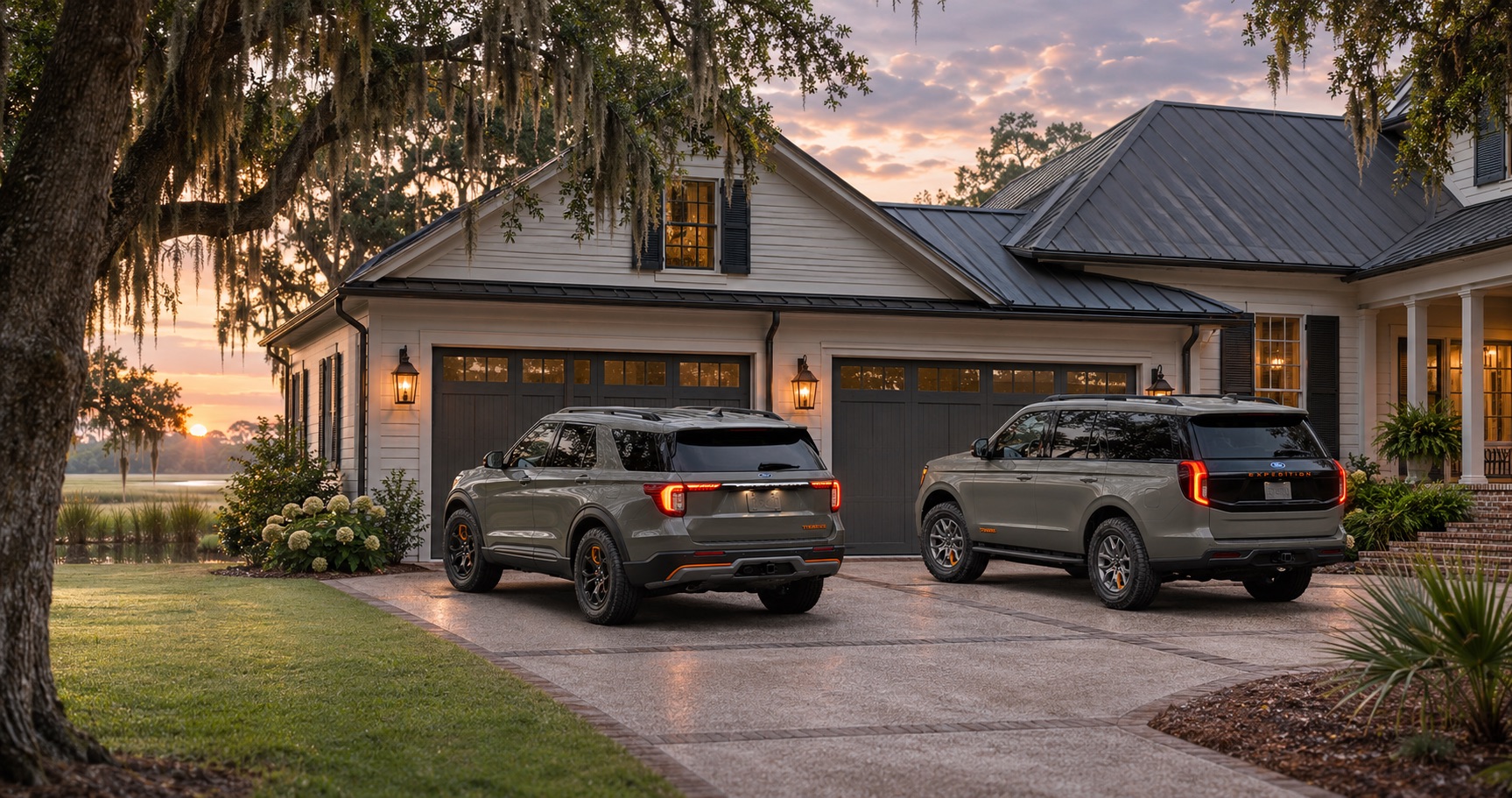
Explorer Tremor seats six, while Expedition Tremor is offered only in the standard-length body. For North Georgia road trips or Lowcountry weekends, make sure the passenger and luggage arrangements work before choosing the performance or trail-focused trim.
Your Starting Point
Full Third Row + Vacation Luggage
Start With Expedition MAX
Why It Fits
When every row is occupied and the luggage still needs a home, MAX offers the strongest starting point. It provides 36.1 cubic feet behind its third row in the regular seating position, compared with 21.6 cubic feet in standard Expedition. That extra depth can be especially useful for a family getaway with suitcases, a stroller, coolers, and beach gear.
Also Consider
Standard Expedition is 11.8 inches shorter than MAX and may already accommodate your family's full packing list. Try the actual bags behind the occupied third row and measure your garage before deciding that the extended body is necessary.
2027 Explorer vs. ExpeditionAnswers in 60 Seconds
What is the starting price difference?
Ford's published starting MSRPs place the 2027 Explorer Active at $39,075 and Expedition Active at $63,920—a $24,845 gap. These are different vehicle classes with different standard equipment; prices exclude destination and other applicable costs.
How many people can each SUV seat?
Explorer seats six with standard second-row captain's chairs or seven with an available bench, except on Tremor, which seats six only. Expedition offers seven- or eight-passenger configurations depending on trim and seating layout; King Ranch seats seven only.
How much cargo space remains behind the third row?
Explorer provides 16.3 cu ft. With the third row in its regular seating position, Expedition provides 21.6 cu ft and MAX provides 36.1 cu ft. Ford also lists optimized figures of 22.9 and 37.4 cu ft, respectively, with the third-row seatbacks fully upright.
How much bigger is Expedition than Explorer?
Explorer measures 198.7 inches long. Standard Expedition measures 209.9 inches—11.2 inches longer—while Expedition MAX measures 221.7 inches, a full 23 inches longer than Explorer.
Which Ford SUV can tow more?
Explorer can tow up to 5,000 lbs. A properly equipped Expedition 4x4 can tow up to 9,600 lbs, while Expedition MAX 4x4 reaches up to 9,000 lbs with the specified Heavy-Duty Trailer Tow equipment. Actual ratings depend on configuration and load.
Do both SUVs offer hands-free highway driving?
Yes. Ford BlueCruise is available on eligible Explorer and Expedition trims. It assists with driving on designated highways, but availability, equipment, and plan requirements vary. Drivers must remain attentive.
Explorer vs. Expedition by Family Need
Which Differences Will You Notice Every Week?
Choose any comparison topic below. Swipe the topic buttons or tables horizontally on smaller screens; use Previous and Next to move through the topics.
Comparison Topic 1 of 6: At a Glance
One Everyday-Size SUV, Two Full-Size Lengths
All three offer a third row, but the reasons to choose them separate quickly when every seat is occupied.
At-a-Glance Takeaway
Both SUVs accommodate a family with three rows; the deciding threshold is whether the Explorer can carry the people and bags you actually bring on the same trip. Expedition adds a true eight-seat configuration, more usable third-row room, and substantial towing capacity. MAX is mainly the answer when the larger family also needs deeper luggage space with every row occupied, not an automatic upgrade in tow rating.
Comparison Topic 2 of 6: Starting Price & Value
The Bigger Vehicle Is a Deliberate Budget Decision
The entry-price difference is large enough that the family routine should explain it before trim or appearance choices do.
Value Takeaway
The $24,845 starting gap is a vehicle-class decision, not a trim-upgrade fee. An Explorer Platinum still starts below Expedition Active, but those two SUVs are not identical in seating, frame, cabin size, or equipment. Price the exact configurations you would actually want: if seven seats and manageable cargo are sufficient, Explorer can leave substantial budget for other priorities. If eight seats, daily third-row comfort, or heavier towing are essential, Expedition brings capabilities that adding Explorer options cannot create.
Comparison Topic 3 of 6: Seating & Cargo
The Key Test: Where Do Bags Go When Row Three Is Full?
Consider the passenger layout and cargo left over before relying on an all-seats-folded maximum.
Family-Space Takeaway
For a Richmond Hill carpool or a drive to the Tybee Island beach, first test where children, adults, and car seats actually fit. Explorer's two-place third row may be perfectly useful for occasional passengers; Expedition's extra third-row seat and 4.7 inches of additional published legroom become more meaningful when adults or growing teenagers ride there frequently. Then load a stroller, folding wagon, sports bags, and cooler with that row upright. Standard Expedition adds usable luggage depth; MAX adds much more without increasing the number of seats. A small difference in cubic feet is less important than whether your own belongings fit without folding someone's seat.
Comparison Topic 4 of 6: Engines & Efficiency
Explorer Offers a Smaller Standard Engine; Expedition Starts With a V6
Power output, fuel consumption, and vehicle size have different tradeoffs from a single horsepower headline.
Powertrain Takeaway
For daily runs between Savannah and Pooler, Explorer's 2.3L option offers a practical fuel-economy advantage over the larger 3.5L Expedition in the RWD/4x2 examples shown. Explorer ST also offers substantial performance without full-size dimensions; peak horsepower alone, however, does not create Expedition's seat count, cargo depth, or towing hardware. Compare actual drivetrain, fuel use, and the number of people you carry before paying for extra output.
Comparison Topic 5 of 6: Towing & Trailer Tasks
Choose Tow Ratings Around the Loaded Trailer, Not the Boat Alone
The Expedition advantage is significant, but its advertised maximum requires a specific drivetrain and tow setup.
Towing Takeaway
For a boat bound for a Lowcountry launch or a camper heading inland, start with its actual loaded weight: boat or camper, trailer, fuel, supplies, and passengers all matter. Explorer is a sound candidate when the combination fits its exact vehicle and hitch ratings. Expedition provides a materially higher heavy-tow ceiling, but most 4x2 versions do not reach the advertised 9,600-pound 4x4 maximum. Remember that hitch tongue weight consumes payload, and MAX's longer body does not raise the top 4x4 towing rating.
Comparison Topic 6 of 6: Tech & Trim Personalities
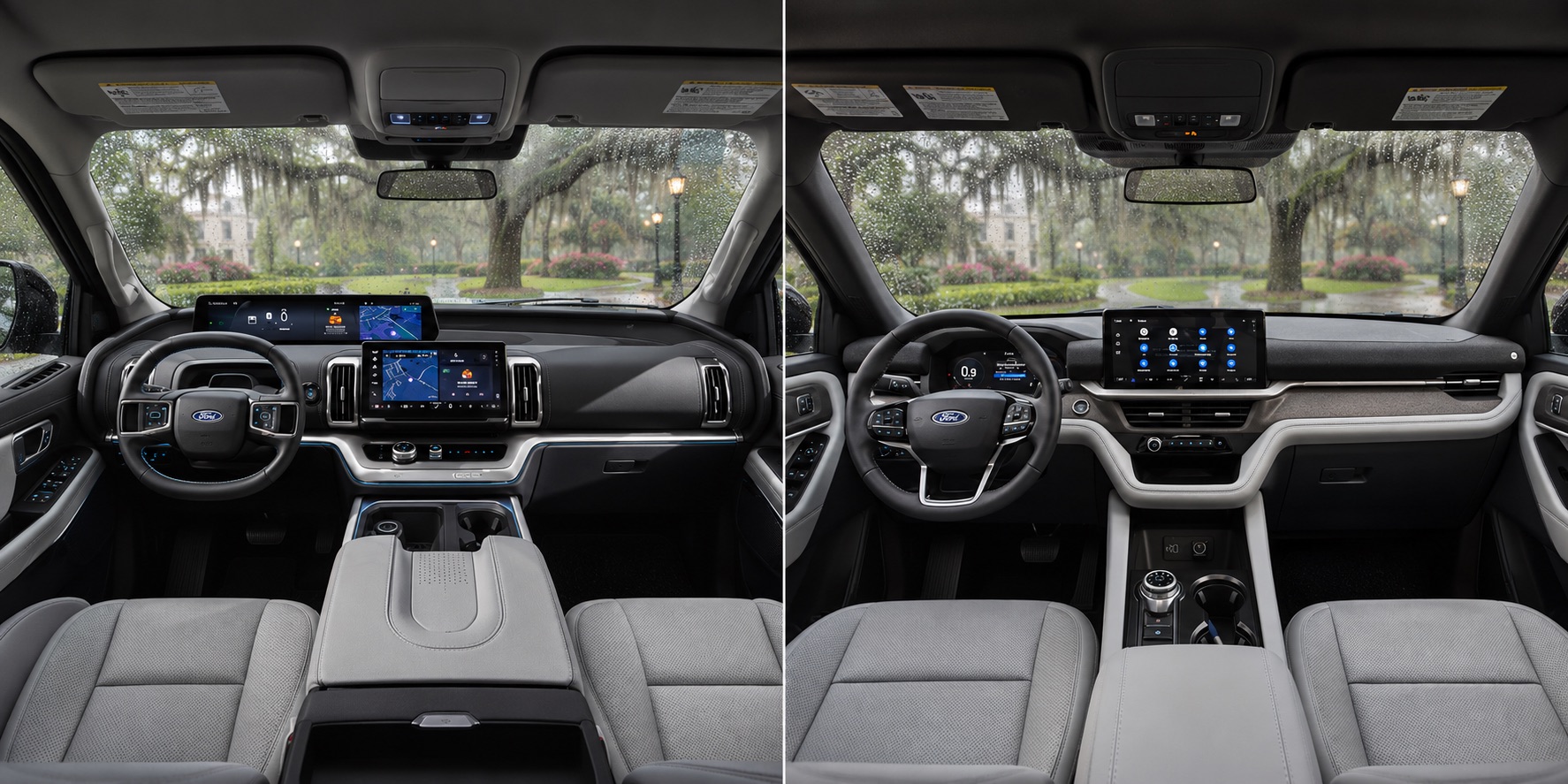
The Two Cabins Share Ford Digital Experience, Not the Same Layout
Technology overlap is real. Cabin organization, trim missions, and luggage access are the greater distinctions.
Equipment Takeaway
Both SUVs offer a 13.2-inch Ford Digital Experience center screen and eligible BlueCruise, so the larger price does not buy an entirely different connected-technology generation. Expedition's 24-inch panoramic instrument display, standard third-row PowerFold, available sliding console, and split rear gate can simplify a family's loading routine. Explorer counters with available massaging seats, a useful smaller cabin layout, and focused ST/Tremor choices. Look for the convenience feature you will actually touch every week instead of treating a screen-size difference as the deciding factor.
Independent Perspective
What Car and Driver Says About Both SUVs
Both SUVs earn strong reviews, with each delivering different advantages for family driving.
2027 Ford Explorer
Car and Driver Rating
8 / 10
Car and Driver highlights the Explorer's comfortable first- and second-row seating, useful convenience features, and responsive available engines. Those strengths make it a compelling three-row SUV for families who want passenger flexibility without moving into the full-size class.
Its appeal is the balance of everyday comfort, modern equipment, and a more manageable footprint. Families who use the third row occasionally may find that combination especially practical.
2027 Ford Expedition
Car and Driver Rating
8 / 10
Car and Driver praises the Expedition's expansive cabin, strong twin-turbocharged V6, comfortable highway ride, and substantial towing capability. These strengths suit families who regularly carry more passengers, luggage, or recreational equipment.
The Expedition's appeal is its ability to handle demanding family travel without sacrificing comfort. Its extra interior room and available towing capability are particularly valuable when the vehicle is frequently carrying a full load.
Although both earn an 8/10 rating, Car and Driver evaluates them in different vehicle classes. Their matching scores reflect different strengths, not identical passenger space, towing capability, or everyday maneuverability.
Compare Real Family Configurations
Seat Layout, Cargo Space & Trailer Equipment Should Decide the Next Test Drive
Look at actual inventory and window stickers to see which second-row layout, drivetrain, tow equipment, and cargo setup is installed. J.C. Lewis Ford offers separate new Explorer and Expedition inventories, so you can narrow each search before you compare vehicles in person.
Where the Family Decision Lands
Choose the SUV Around Your Fullest Regular Trip
Where Explorer Earns Its Place
Explorer makes a compelling everyday choice when most trips involve four or five passengers, the third row provides flexibility for extra riders, and larger cargo loads can travel with that row folded. It offers genuine three-row versatility, modern Ford technology, and available performance or trail-focused trims without the added expense and dimensions of a full-size SUV. Around Savannah and Richmond Hill, that smaller footprint can make parking, school runs, and weekly errands easier. The key question is whether Explorer still works when your family needs its seats and cargo space at the same time.
Where Expedition & MAX Earn Their Space
Expedition earns its larger footprint when six or seven people regularly travel together with luggage, sports equipment, or other gear behind the occupied third row. It also provides a path to eight-passenger seating and substantially greater towing capability when properly configured. Expedition MAX takes the cargo advantage further, offering additional room for vacation luggage, beach equipment, and longer family trips across Georgia or into the Lowcountry. That extra length is valuable when you use the space, but standard Expedition may be the better balance if it already accommodates everything your family brings.
The Deciding Boundary
Some requirements settle the decision immediately: eight passengers need a verified eight-seat Expedition configuration, while a trailer exceeding Explorer's vehicle-specific towing limit requires a suitably equipped alternative. Otherwise, neither SUV is automatically the better purchase. The deciding factor is whether Expedition's additional passenger and cargo capacity delivers enough everyday value to justify its higher cost and larger size. Before choosing, test third-row access with your passengers, check how your actual luggage fits, and consider the parking spaces and garage you use most often.
This fit check provides a shopping starting point, not a vehicle-specific seating, towing, or payload certification. Verify equipment, measurements, loaded trailer weight, and actual ratings before purchase.
Common Family SUV Questions
2027 Ford Explorer vs. Expedition FAQ
A Local Ford Team for the Whole Journey
How J.C. Lewis Ford
Makes Shopping & Ownership Easier
Buying a Ford should come with confidence in the people who help you choose it, bring it home, and care for it in the years ahead. At J.C. Lewis Ford, more than a century of Savannah roots meets convenient ways to shop and service your vehicle around a busy schedule.
A strong dealership relationship should make the entire experience easier, from the first conversation through routine maintenance and future service needs.
Family-Held Ford Heritage Since 1912
J.C. Lewis Ford began serving Savannah in 1912 and remains a family-held Ford operation. That long-standing local presence gives shoppers a dealership with deep community roots and a commitment to relationships that extend well beyond one vehicle purchase.
Transparent Shopping & Southeast Home Delivery
Explore inventory, discuss trade-in values and financing, and work through purchase details with personalized guidance. Remote transaction assistance and home delivery are available for eligible purchases, helping customers from Richmond Hill, the Lowcountry, and elsewhere in the Southeast reduce unnecessary dealership trips.
Ford Mobile Service & Pickup and Delivery
Eligible maintenance and minor repairs, including selected oil changes, battery services, and software updates, can be completed at your home or workplace through Ford Mobile Service. When your vehicle needs to visit the shop, available Pickup & Delivery can help keep your workday, school schedule, or family plans moving. Service and location eligibility vary.
Factory-Trained Ford Service & Genuine Parts
From scheduled maintenance to diagnostics and repairs, J.C. Lewis Ford's factory-trained technicians work with Ford-specific knowledge and genuine Ford parts where applicable. That means you have a dedicated Savannah service resource to help protect your vehicle's performance, reliability, and long-term ownership experience.
Visit J.C. Lewis Ford
Your Savannah Ford Dealership
J.C. Lewis Ford Savannah
9505 Abercorn Street
Savannah, GA 31406
Proudly serving Savannah, Coastal Georgia, and the South Carolina Lowcountry.
How Can We Help You Today?
Ask our team about remote shopping, home delivery, Ford Mobile Service, and Pickup & Delivery eligibility in your area.
Where to Go Next
Disclaimers:
*2027 Explorer and Expedition starting MSRP figures were reviewed against Ford's U.S. model information on October 30, 2026. Stated prices exclude destination/delivery, taxes, title, license, options, accessories, dealer charges, and applicable incentives. Vehicle and option pricing may change.
*Seating depends on model, trim, second-row bench or captain's chairs, and selected equipment. Explorer seats a maximum of seven when equipped for it; Explorer Tremor seats six. Expedition offers seven- and eight-seat builds. Verify seat count and restraint positions on the individual vehicle.
*Dimensions and cargo volumes are 2027 published figures. Explorer is 198.7 inches long with 16.3 cu ft behind row three. Standard Expedition is 209.9 inches with 21.6 cu ft behind row three in its regular position, while MAX is 221.7 inches with 36.1 cu ft. Ford also publishes optimized 22.9/37.4-cu-ft volumes with third-row seatbacks fully upright; loaded cargo depends on seat positions, equipment, and the shape of the items packed.
*Maximum trailer ratings are not individual-vehicle towing guarantees. Explorer's published maximum is 5,000 pounds. Expedition 4x4 and MAX 4x4 can reach 9,600 and 9,000 pounds, respectively, only with the required equipment and configuration. Engine, axle, drivetrain, packages, hitch, passenger weight, cargo, accessories, frontal area, and tongue weight affect actual capability. Confirm the window sticker, owner's manual, towing guide, and certification labels; do not exceed any rating.
*Published output figures include Explorer's 300-hp 2.3-liter EcoBoost and available up-to-400-hp 3.0-liter V6, and Expedition's 400-hp 3.5-liter EcoBoost with up-to-440-hp high-output option in applicable trims. Figures and availability depend on final configuration, market, and fuel requirements.
*The 2027 Explorer 2.3L RWD is listed at 20/29 city/highway MPG in current 2027 vehicle fuel-economy listings and dealer data. EPA-estimated fuel economy depends on engine, drivetrain, model, and test method; actual mileage changes with driving, weather, load, terrain, and towing. Never treat an EPA result for one configuration as the entire model lineup's efficiency.
*BlueCruise and other driver-assistance systems are supplemental. BlueCruise requires eligible equipment, a compatible service plan where applicable, and approved roads, and the driver must continuously monitor the road. No driver-assistance system replaces attentive driving.
*Car and Driver's 8/10 review ratings apply to the separately reviewed 2027 Explorer and Expedition model lines in their respective categories, not to identical configurations or a direct head-to-head test. Ratings and editorial opinions may change.
*The Family-Use Check gives general guidance, not a legal seating, hitch, payload, or child-seat installation determination. Confirm the individual vehicle configuration and equipment in person. Previous-model-year research links are labeled and should not be substituted for the 2027 specifications here.