2026 Ford F-150 / Engine Comparison
2.7 vs. 3.5 EcoBoost: Which F-150 Engine Fits Your Needs?
Daily versatility or serious towing? We'll help match the right EcoBoost engine and F-150 equipment to your everyday drive and the trailer you plan to pull.
The everyday choice
2.7L EcoBoost
Everyday miles, weekend projects and lighter recreational trailers.
The towing-focused choice
3.5L EcoBoost
Heavier boats, campers and more demanding regular towing.
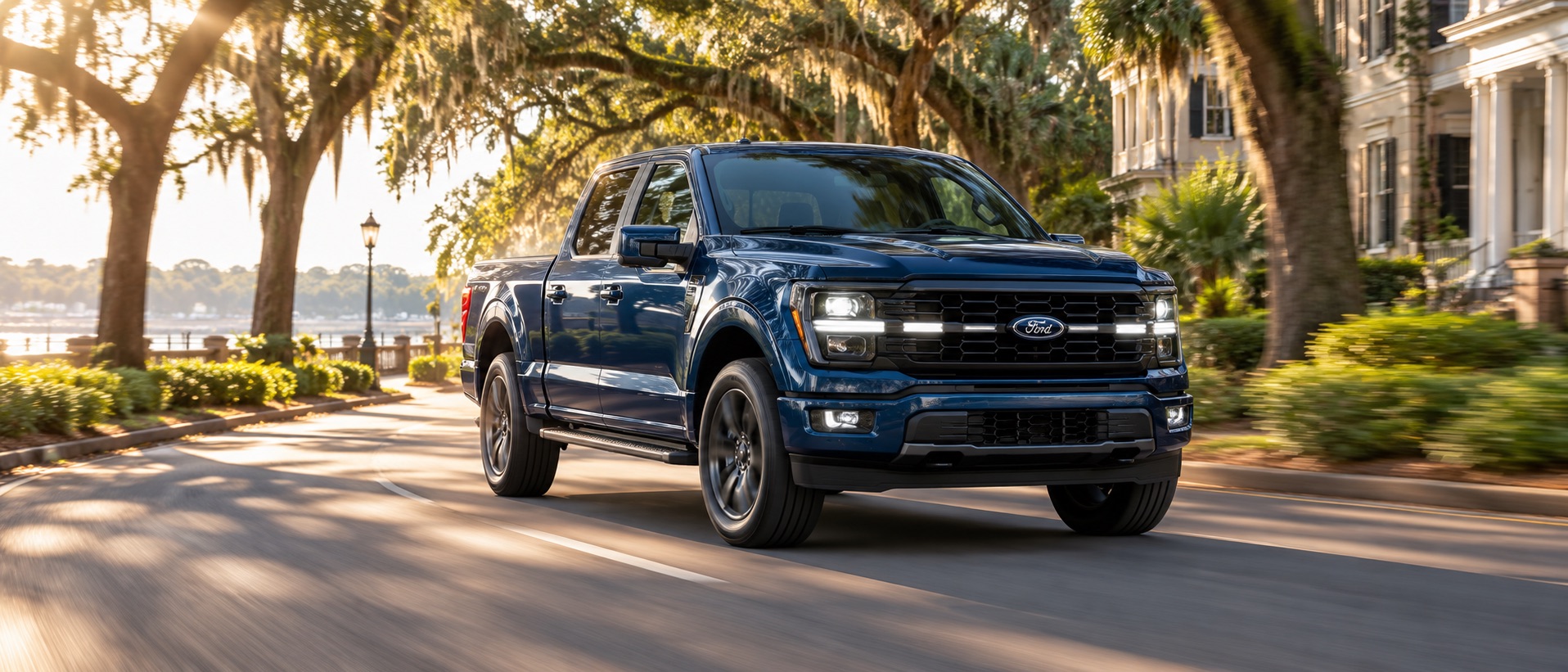
The comparison
2026 F-150 2.7L vs. 3.5L EcoBoost: The Numbers That Matter
Both engines are twin-turbocharged gasoline V6s paired with Ford's 10-speed automatic transmission. Here's the direct comparison; the towing and payload figures are maximum available ratings for specific builds, not a promise for every truck with that engine.
| Specification | 2.7L EcoBoost V6 | 3.5L EcoBoost V6 |
|---|---|---|
| Horsepower | 325 hp | 382 hp† |
| Torque | 400 lb-ft | 500 lb-ft |
| Transmission | 10-speed automatic | 10-speed automatic |
| Max available conventional towing* | 8,400 lbs | 13,500 lbs |
| Max available payload* | 1,775 lbs | 2,440 lbs |
| EPA combined MPG, conventional 4WD** | 20 mpg | 19 mpg |
*Ford's 2026 F-150 towing guide, revised March 10, 2026. Maximum towing and payload are achieved on particular configurations and may not be achieved simultaneously. The 3.5L's maximum towing rating requires the specified Tow/Haul Package and Max Tow Axle upgrade; ratings vary with cab, bed, axle, drivetrain, options, passengers and cargo. Ford rates horsepower and torque using premium fuel, SAE J1349. **Representative conventional 2026 F-150 4WD EPA combined estimates from the EPA/DOE Fuel Economy Guide; check the vehicle's window sticker for its own rating.
† Horsepower source note: Ford's revised 2026 towing guide lists 382 hp for the conventional 3.5L EcoBoost, while Ford's 2026 F-150 product specifications list 400 hp. Both sources list 500 lb-ft of torque. We can help check the engine information for the specific truck you are considering.
Performance under load
What 100 More lb-ft of Torque Changes in the F-150
Both EcoBoost V6s use twin turbochargers and Ford's 10-speed automatic. Their peak torque ratings reveal a difference in available engine output, while the transmission and truck configuration determine how that power feels on the road.
Under the Hood
A Closer Look at Both EcoBoost V6 Engines
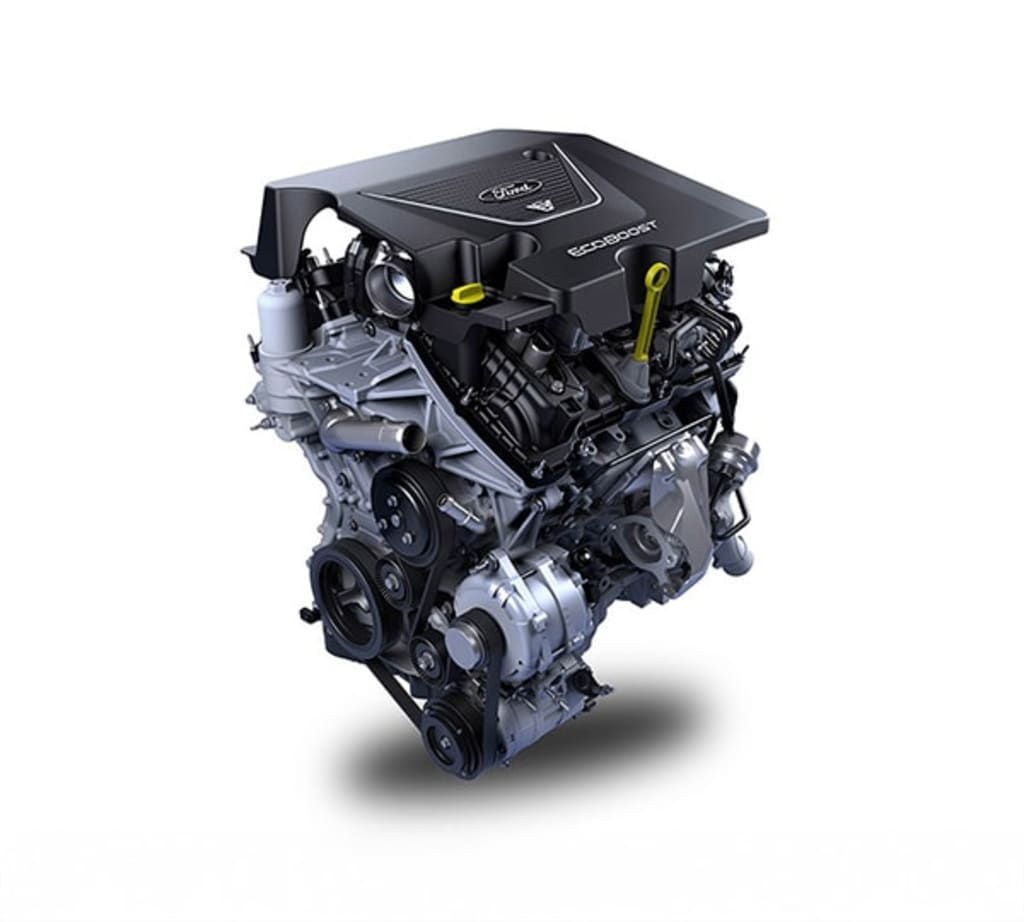
2.7L EcoBoost
Rated peak torque
400lb-ft
- Construction: A compacted graphite iron upper block and aluminum cylinder heads provide a strong foundation in a compact V6.
- Boost and fueling: Twin intercooled turbochargers and direct injection help generate substantial torque from 2.7 liters.
- Passing response: The 10-speed can select a lower gear to bring the engine into a useful power range for a merge or uphill pass.
- Truck-to-truck feel: Cab configuration, gearing and vehicle weight influence how this engine responds in different F-150 builds.
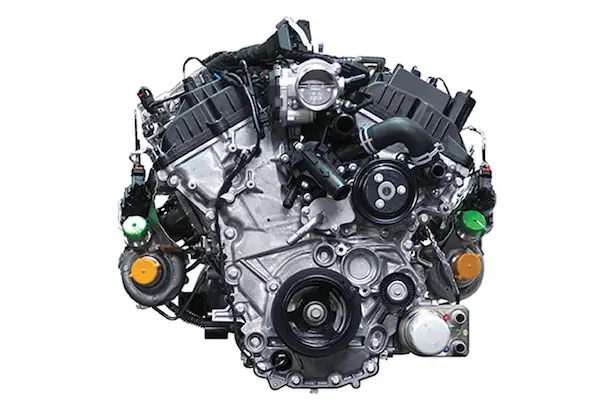
3.5L EcoBoost
Rated peak torque
500lb-ft
- Engine design: The larger 3.5L gasoline V6 also uses twin intercooled turbochargers rather than relying on displacement alone.
- Under load: Its 25% higher peak torque rating gives the powertrain more pulling force to work with on a grade or during loaded acceleration.
- Gear changes: Ford's 10-speed can still downshift as conditions demand; extra torque does not mean the truck stays in one gear.
- Not the hybrid: The conventional 3.5L EcoBoost is separate from the 3.5L PowerBoost Full Hybrid, with different published specifications.
The bars compare rated peak engine torque—not measured acceleration, trailer ratings or a guarantee of how a specific F-150 will perform.
Trailer reality check
Before You Tow, Check More Than the Engine Badge
A 3.5L F-150 does not automatically tow 13,500 pounds, just as every 2.7L truck does not tow 8,400 pounds. The loaded trailer, the truck's payload, and its exact equipment determine whether a particular F-150 is a sound match.
Get the fully loaded trailer weight
For a boat, count the motor, fuel, trailer and gear. For a camper, include water, supplies and equipment. The empty brochure weight doesn't tell the whole story.
Look at the doorjamb payload label
People, cargo, truck accessories and conventional trailer tongue weight all count toward available payload. A generous tow rating cannot make up for insufficient payload.
Match the exact F-150 build
Check cab, bed, 2WD or 4WD, axle ratio, hitch, trailer brakes and factory towing equipment against Ford's model-year chart for the vehicle you want to buy.
For Ford's configuration-specific ratings behind these three checks, see our 2026 Ford F-150 towing and payload guide.
Fuel cost in context
2.7 vs. 3.5 EcoBoost MPG: What One MPG Means Per Year
The EPA's representative conventional 4WD combined estimates differ by one mpg. Here's the practical fuel-use difference over a typical year, without mixing in towing limits or purchase-price assumptions.
2026 F-150 / Representative 4WD / Combined EPA
At 12,000 miles per year, these combined EPA estimates work out to approximately 600 gallons for the 2.7L and 632 gallons for the conventional 3.5L. That's about 32 gallons apart. Using an illustrative $3.50 per gallon, the annual difference is roughly $110.
This is a comparison example, not a current fuel-price quote or a guaranteed driving result. Speed, idling, towing and equipment affect real-world consumption. Check each truck's window sticker, then weigh purchase price and equipment separately from its estimated fuel bill.
Choose your driving profile
Which EcoBoost Engine Fits the Way You Use Your F-150?
Pick the scenario closest to your routine. Open it for the recommendation and what to confirm before you buy.
Mostly daily drivingCommuting, errands and weekend utilityStart with 2.7LSee what to compare
Occasional recreationA boat or camper on select weekendsCompare both enginesSee what decides it
Repeated towingHeavier trailers and regular work loadsPrioritize 3.5LSee what to verify
Choose the actual truck
An Engine Is Only One Part of the Right F-150
Your engine preference narrows the search. These four details help determine which specific F-150 deserves a closer look.
Choose seating and bed length for your passengers, parking routine and everyday cargo.
Compare trim content, comfort, technology and convenience equipment on the specific trucks available.
Confirm its engine and factory equipment. For a used F-150, review mileage, service records and inspection findings.
Weigh price, equipment and your expected use over the next few years before making the final choice.
When comfort, technology and cab choices also matter, use our 2026 F-150 trim-level guide to connect your engine preference to the rest of the truck.
Shopping a 2027 F-150? Here's What Changed.
Ford introduced the 3.0L EcoBoost V6 as the new standard engine for the 2027 Ford F-150, replacing the 2.7L. The conventional 3.5L EcoBoost remains in the lineup. This comparison therefore answers the 2.7L-versus-3.5L question for 2026 F-150s and earlier 2.7L-equipped examples, not a new 2027 model with a 3.0L engine. See Ford's 2027 powertrain announcement. We'll help you compare trucks using their actual model year and equipment.
Why Shop With Us
Compare Your Next F-150 With J.C. Lewis Ford
At J.C. Lewis Ford, we have helped Savannah-area drivers find the right vehicles since 1912. Today, we connect F-150 engine research with actual truck equipment, clear purchase details, convenient buying options and Ford service support after delivery.
Review Actual F-150 Configurations
We help you compare the engine, cab, bed, axle and available towing equipment on the trucks you are considering. The window sticker and vehicle-specific ratings matter more than an engine badge alone.
Clear Pricing and Purchase Guidance
We walk through the listed vehicle price, its equipment, your trade-in and financing options in one conversation. You can judge the full purchase before deciding which F-150 is right for you.
Convenient Ways to Buy
Eligible purchases can include remote transaction assistance and delivery across the Southeast. We can review the available arrangements for the truck you choose before you commit.
Ford Service Beyond the Sale
Our Savannah service and parts teams support your F-150 after delivery. Ford Mobile Service is also available for qualifying maintenance and repairs, vehicles and locations.
Common F-150 Engine Questions
2026 Ford F-150 2.7L vs. 3.5L EcoBoost FAQs
Is the 2.7L EcoBoost powerful enough for a Ford F-150?
Yes. Ford rates the 2026 F-150 2.7L EcoBoost at 325 horsepower and 400 lb-ft of torque, with up to 8,400 pounds of conventional towing when properly equipped. It is a capable option for everyday truck use and appropriately matched trailers. Check the specific truck's ratings before towing.
How much more can the 3.5L EcoBoost tow than the 2.7L?
For the 2026 F-150, Ford publishes maximum available conventional towing ratings of 13,500 pounds for the 3.5L EcoBoost and 8,400 pounds for the 2.7L EcoBoost. Those are different properly equipped configurations, not guaranteed ratings for every truck. Verify the actual vehicle's equipment and towing chart.
Which EcoBoost engine gets better gas mileage?
The 2.7L has the advantage in representative 2026 four-wheel-drive F-150 EPA combined ratings: 20 mpg versus 19 mpg for the conventional 3.5L EcoBoost. The exact truck's window sticker is the best comparison for its configuration, and towing changes real-world fuel use.
Is the 3.5L EcoBoost better for towing a boat or travel trailer?
The 3.5L is the stronger choice when the loaded boat or camper is heavy, towing is frequent or more available capacity is needed. A 2.7L F-150 can still be the right truck for a lighter trailer. Compare the fully loaded trailer weight, tongue weight, truck payload and vehicle-specific tow rating before choosing.
Does the 3.5L EcoBoost always have more payload capacity?
No. Ford lists higher maximum available payload for the 2026 3.5L engine lineup, but actual payload is determined by each truck's equipment and configuration. Check the doorjamb payload label; do not use the engine's published maximum as the rating for every F-150.
Is the 3.5L PowerBoost hybrid the same as the 3.5L EcoBoost?
No. The 3.5L PowerBoost Full Hybrid combines a gasoline engine with an electric motor and has its own specifications, fuel-economy ratings and towing limits. This comparison covers the conventional, non-hybrid 3.5L EcoBoost V6 against the 2.7L EcoBoost V6.
Can I get a 2.7L EcoBoost in a 2027 F-150?
No. Ford announced that a new 3.0L EcoBoost replaces the 2.7L as the standard F-150 engine for 2027. The 2.7L-versus-3.5L comparison applies to the 2026 F-150 and earlier 2.7L-equipped trucks.
How can I confirm an F-150's exact towing capacity?
Identify the model year, engine, cab, bed, drivetrain, axle and towing package, then match those details to Ford's applicable towing guide. Check the truck's doorjamb payload label and the rating of its installed hitch. Our team at J.C. Lewis Ford can help compare the available trucks with your trailer and carrying needs.
Your Next Step
Keep Exploring the F-150 or Start Shopping With J.C. Lewis Ford
Use our inventory and dealership resources to compare available F-150s, value your trade or explore financing. For more model details, the research guides cover trim differences, dimensions, towing and long-term ownership.