2027 Ford F-150 / Engine Comparison
2027 Ford F-150 3.0L vs. 3.5L EcoBoost: Which Engine Fits Your Needs?
Need a truck for Savannah commutes, weekend boats or serious work? At J.C. Lewis Ford, we compare how the 3.0L and 3.5L fit your actual loads, equipment and budget. We'll recommend the right F-150—not just the engine with the biggest number.
Everyday versatility
3.0L EcoBoost
Our starting point for everyday driving, useful truck capability and lighter loads that meet the truck's ratings.
Heavy towing priority
3.5L EcoBoost
Our recommendation for more demanding towing, heavier trailers and frequent loaded trips.
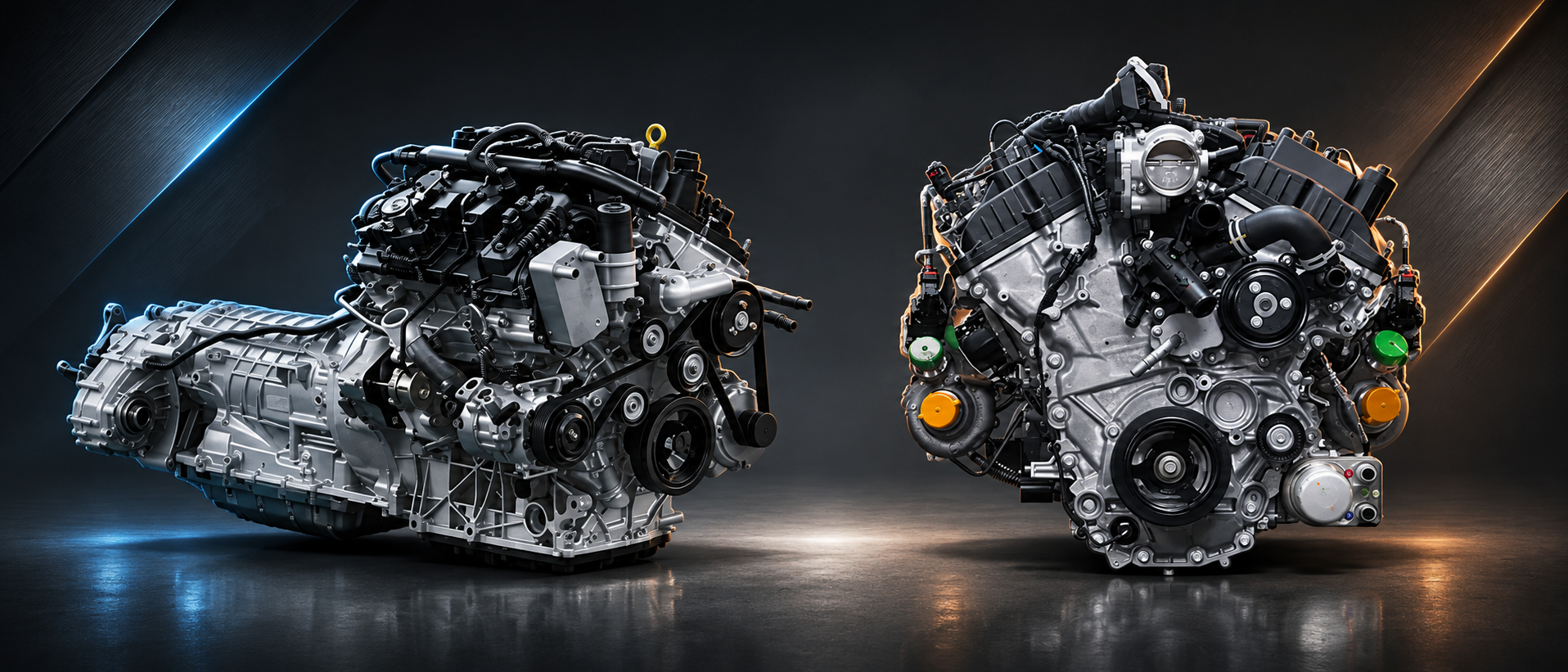
Compare the numbers
2027 F-150 3.0L vs. 3.5L EcoBoost: Specifications
Both are twin-turbo gasoline V6 engines paired with a 10-speed automatic transmission. We use the maximum available towing figures as a starting point, then check the configuration and equipment of the individual F-150 you want to buy.
| Specification | 3.0L EcoBoost V6 | 3.5L EcoBoost V6 |
|---|---|---|
| Engine position | New standard EcoBoost V6 | Higher-output conventional EcoBoost V6 |
| Peak torque | 400 lb-ft | 500 lb-ft |
| Transmission | 10-speed automatic | 10-speed automatic |
| Max available conventional towing, 4x2* | 8,400 lbs* | 13,300 lbs* |
| Max available conventional towing, 4x4* | 8,200 lbs* | 13,500 lbs* |
| Max available 4x4 payload* | 1,700 lbs* | 2,175 lbs* |
| 2027 EPA combined MPG | Not confirmed for the compared configurations | Not confirmed for the compared configurations |
The maximum available ratings shown require specific equipment and configurations. For the 3.5L's highest towing ratings, look for an eligible SuperCrew with the Tow/Haul Package (53T) and Max Tow Axle upgrade. Towing and payload maximums are not automatically available together. We'll check the factory equipment and doorjamb ratings on your actual truck before recommending it for your load.
We review the truck's engine, cab, bed, axle, tow equipment and doorjamb payload label with you before recommending a configuration. That puts a real truck—not a brochure maximum—behind your buying decision.
Performance under load
What 100 More lb-ft of Torque Changes in the F-150
The new 3.0L earns its place in everyday driving. The conventional 3.5L brings higher peak torque when heavier trailers or regular loaded travel are your priority. Here's how we use that difference to recommend a truck.
Under the Hood
A Closer Look at the 3.0L and 3.5L EcoBoost
3.0L EcoBoost
Rated peak torque
400lb-ft
- Daily driving: We recommend the 3.0L for a practical mix of commuting, errands, jobsite trips and weekend utility when your load fits the selected truck.
- Updated engine: The 3.0L provides approximately 10%–11% more torque** across typical driving ranges than the outgoing 2.7L, although both have the same 400 lb-ft peak rating.
- Money where you feel it: When the 3.0L covers your needs, we can compare how much of your budget is better spent on cab space, equipment or comfort.
- Check the truck: We confirm the actual towing and payload limits before matching it to a trailer.
3.5L EcoBoost
Rated peak torque
500lb-ft
- Heavier loads: With 500 lb-ft peak torque, the conventional 3.5L is our first recommendation when you regularly tow substantial equipment, campers or boats.
- Tow equipment matters: We'll check the axle and towing package; the engine badge alone does not give a particular truck its maximum available tow rating.
- Clear purchase comparison: We compare similarly equipped trucks and explain what the additional power and equipment cost.
- Not the hybrid: The 3.5L PowerBoost Full Hybrid and Raptor high-output engine have separate specifications.
These bars compare rated peak engine torque—not loaded acceleration, the tow rating of an individual F-150 or how a particular truck will feel on the road.
Trailer reality check
Will the 3.0L Tow Your Boat—or Do You Need the 3.5L?
Heading to a Savannah-area boat ramp or pulling a camper into the Lowcountry? We'll compare your full loaded combination before you buy. More engine torque is helpful, but payload, hitch ratings and factory towing equipment decide which F-150 actually qualifies.
Tell us what the trailer weighs loaded
Include boat motor, fuel, trailer and fishing gear—or water, supplies and equipment in a camper. We work with the loaded weight rather than relying on an empty-trailer figure.
Count people, cargo and hitch load
We add tongue weight, passengers, accessories and bed cargo, then check that total against the individual truck's doorjamb payload rating and GVWR.
Check the exact factory configuration
We review cab, bed, drivetrain, axle, tow package, receiver rating, trailer brakes and GCWR. That removes unsuitable trucks from your search before you spend time on them.
Payload: why the total changes our recommendation
Four illustrative occupants at 175 lb each add 700 lb; 200 lb of bed gear brings the example to 1,500–1,800 lb of payload demand* before other accessories. The maximum available payload for a 2027 3.0L 4x4 is 1,700 lb*. At the 1,800-lb upper estimate, we rule out that engine/drivetrain combination. At 1,500 lb, we still need to inspect the particular XLT's label—it may have less capacity than the advertised maximum.
We'll compare suitable 3.5L trucks if needed, but we verify their individual payload limits too. A larger engine is not an exemption from the truck's weight ratings.
Hitch: why 6,000 pounds needs another check
The 2027 F-150 factory receiver has a 5,000-lb* weight-carrying trailer limit and a 500-lb* tongue-load limit. Our illustrated 6,000-lb trailer exceeds those limits. A compatible, properly equipped weight-distributing hitch has higher receiver limits—up to 13,500 lb* trailer and 1,400 lb* tongue load—but cannot override the individual truck's ratings.
We'll review whether the boat trailer, coupler and brakes permit the required setup. If weight distribution isn't compatible, we won't treat the standard weight-carrying connection as an acceptable shortcut.
Fuel economy and value
3.0L vs. 3.5L EcoBoost MPG and Engine Upgrade Value
We won't guess at a fuel-economy advantage or a fixed price for an engine upgrade. We'll compare the MPG information available for the trucks you're shopping, their actual prices and their equipment, so you can see what each choice means for your budget and driving needs.
2027 F-150 / EPA combined ratings
If the 3.0L meets your towing and payload needs, we'll compare similarly equipped trucks and show you whether it costs less, by how much, and what you gain with each engine. You'll see how each actual price fits your budget, cab, bed and everyday equipment priorities.
When the 3.5L fits heavier loads, we'll show you its actual price and equipment differences just as clearly. Neither engine has enough real-world 2027 ownership history to prove a long-term reliability advantage. Your exact window sticker and a current purchase comparison matter more than assumptions.
Choose your driving profile
Which EcoBoost Engine Fits Your Week?
Tell us what you do with your truck. We'll make an engine recommendation and explain what needs to be checked before you buy.
Mostly daily milesCommuting, errands and weekend projectsStart with 3.0LSee what to compare
For Savannah, Richmond Hill and Bluffton commutes with everyday bed use, start with the 3.0L. We'll check the cab and equipment you want, verify payload for any weekend hauling and help you find a truck that does the job without an unnecessary engine upgrade.
Shop F-150s and Check the EngineSome weekends involve towingFishing boat or family camperCompare both enginesSee what to compare
For a boat or family camper, we'll start with your fully loaded trailer, people and equipment, then compare 3.0L and 3.5L configurations that actually qualify. Tell us about next year's towing plans too—we'll help you buy for the loads you expect, not only the trip you're taking this weekend.
Review My Towing RequirementsFrequent loaded useHeavier trailers and longer work tripsPrioritize 3.5LSee what to compare
If you tow heavy equipment or travel trailers regularly, prioritize the 3.5L and its 500 lb-ft of peak torque. We'll identify the right tow package, axle, GVWR, GCWR and payload capacity before recommending an actual truck. More torque is valuable, but your truck still has to clear every rating.
Compare 3.5L Truck ConfigurationsChoose the actual truck
Which 2027 F-150 Trims and Equipment Fit Each Engine?
We don't stop at the engine badge. The 3.0L is standard on XL, STX, XLT and Lariat, while the conventional 3.5L is available on eligible versions of those trims and standard on Tremor, King Ranch and Platinum. We'll confirm your preferred cab, bed, drivetrain and tow-package combination before you choose.
We'll begin with the standard 3.0L if its ratings cover your loads, then use your budget for comfort and the equipment you actually want.
We'll compare 3.5L configurations, including upper-trim choices, and verify the exact towing equipment available.
We check passenger room, work space and drivetrain against your week—not only your heaviest day.
We examine the truck's payload label, tow setup, factory equipment and upfront price so you can compare the complete purchase.
Want every trim's equipment in one place? Continue to our 2027 Ford F-150 trim guide. The PowerBoost hybrid and Raptor high-output 3.5L are different powertrains and are outside this conventional EcoBoost comparison.
Why the New 3.0L Matters for 2027 F-150 Buyers
The 2027 F-150's 3.0L is a new standard EcoBoost V6, not the outgoing 2.7L with a different badge. Its 325-hp and 400-lb-ft peak figures don't tell the whole story: the 3.0L delivers more torque** in typical daily-driving ranges than the outgoing 2.7L. We'll help you compare that everyday advantage against the 3.5L's additional towing potential and the price of a properly equipped truck.
2027 F-150 3.0L vs. 3.5L EcoBoost FAQs
Your Ford Team in Savannah
Why Buy Your 2027 F-150 From J.C. Lewis Ford in Savannah?
You can read engine numbers and browse listings anywhere. At J.C. Lewis Ford, we turn those numbers into a truck-shopping decision you can act on. We compare your real load against suitable configurations, show you clear upfront vehicle pricing and keep the conversation convenient—even when you want to begin from home. You'll know what you're buying, why it fits and what it costs before you choose.
J.C. Lewis Family Roots
100+ years
The J.C. Lewis family has served generations of Coastal Georgia drivers through more than a century of automotive history.
Choose a Savannah team built on lasting customer relationships, with practical truck guidance and clear purchase conversations today.
Bring Your Trailer. Get a Clear Truck Recommendation.
We compare the loaded trailer, passengers, cargo, axle, tow package and payload label before we recommend a specific F-150. You avoid wasting time on trucks that can't meet your load and gain the confidence to shop the right ones. Review Your Towing Needs
See the Price Before You Decide.
Our clear upfront pricing puts the cost of each truck in front of you. We'll compare similarly equipped 3.0L and 3.5L models and explain what the engine and towing equipment add, so your money goes toward capability and features that matter to you. Shop New F-150s
Start the Conversation From Wherever You Are.
Send us your towing details and preferred truck setup, then continue the discussion remotely when that's more convenient. We make it easier to narrow your options before a dealership visit, saving you unnecessary trips and repeat explanations. Talk With Our Team
Buy With a Savannah Team That Knows Its Community.
Our multi-generational family roots give you a local dealership relationship that extends beyond a single transaction. We'll walk you through the complete purchase, including trade-in choices when you're replacing a vehicle, with clear information at each step. Value Your Trade
Start Shopping at J.C. Lewis Ford
Keep Researching Ford F-150s
*Towing, payload and receiver capacities shown are maximum available factory ratings for properly equipped 2027 F-150 configurations, not guarantees for every truck with the same engine. Towing and payload maximums should not be assumed to apply simultaneously. Ratings depend on the individual truck's cab, bed, drivetrain, axle, packages, passengers, accessories and cargo. The highest conventional 3.5L towing figures require an eligible SuperCrew, Tow/Haul Package (53T) and Max Tow Axle upgrade. The 3.0L 4x4's 1,700-lb payload figure is a maximum available rating, not the capacity of every 3.0L 4x4 or XLT. The factory receiver's weight-carrying maximum is 5,000 lb of trailer weight and 500 lb of tongue load; the properly equipped weight-distributing receiver can be rated up to 13,500 lb of trailer weight and 1,400 lb of tongue load, but neither figure overrides a particular truck's lower ratings. Before towing, we recommend confirming receiver and hitch ratings, weight-distribution compatibility with the trailer and its brakes, tongue weight, trailer brakes, doorjamb payload, GVWR, GAWR, GCWR and the vehicle-specific towing limit. Weights assigned to people, gear and tongue load in our example are planning illustrations, not measured weights or ratings for a particular vehicle.
**The 2027 3.0L EcoBoost's approximately 10%–11% higher torque through engine speeds typical of everyday driving is a comparison with the outgoing 2.7L EcoBoost, not a 10%–11% increase in peak torque. Both engines have a rated 400 lb-ft peak output. This difference describes torque delivery across normal operating ranges and does not guarantee a particular increase in acceleration, fuel economy or towing capacity.
Vehicle and engine images illustrate the model and powertrain types, not the engine or equipment installed in an individual vehicle. Fuel-economy estimates, available engine and package combinations, pricing and offers vary by specific truck and current availability. We'll confirm the relevant figures and equipment with you before purchase.